
Pain when reaching overhead or behind the back, night discomfort, or weakness when lifting away from the body.
Understand what you are feeling
Pain and Injury Guide
Clear, practical education to help you make sense of common pain patterns and choose a useful next step.
Education is not a diagnosis. New, severe, or worsening symptoms should be assessed by a qualified health professional.
01 · Shoulder pain
Rotator cuff tears and supraspinatus pain.
The rotator cuff helps centre and control the shoulder. Pain, weakness, and difficulty lifting the arm can have several causes, so a full history and movement assessment matter.
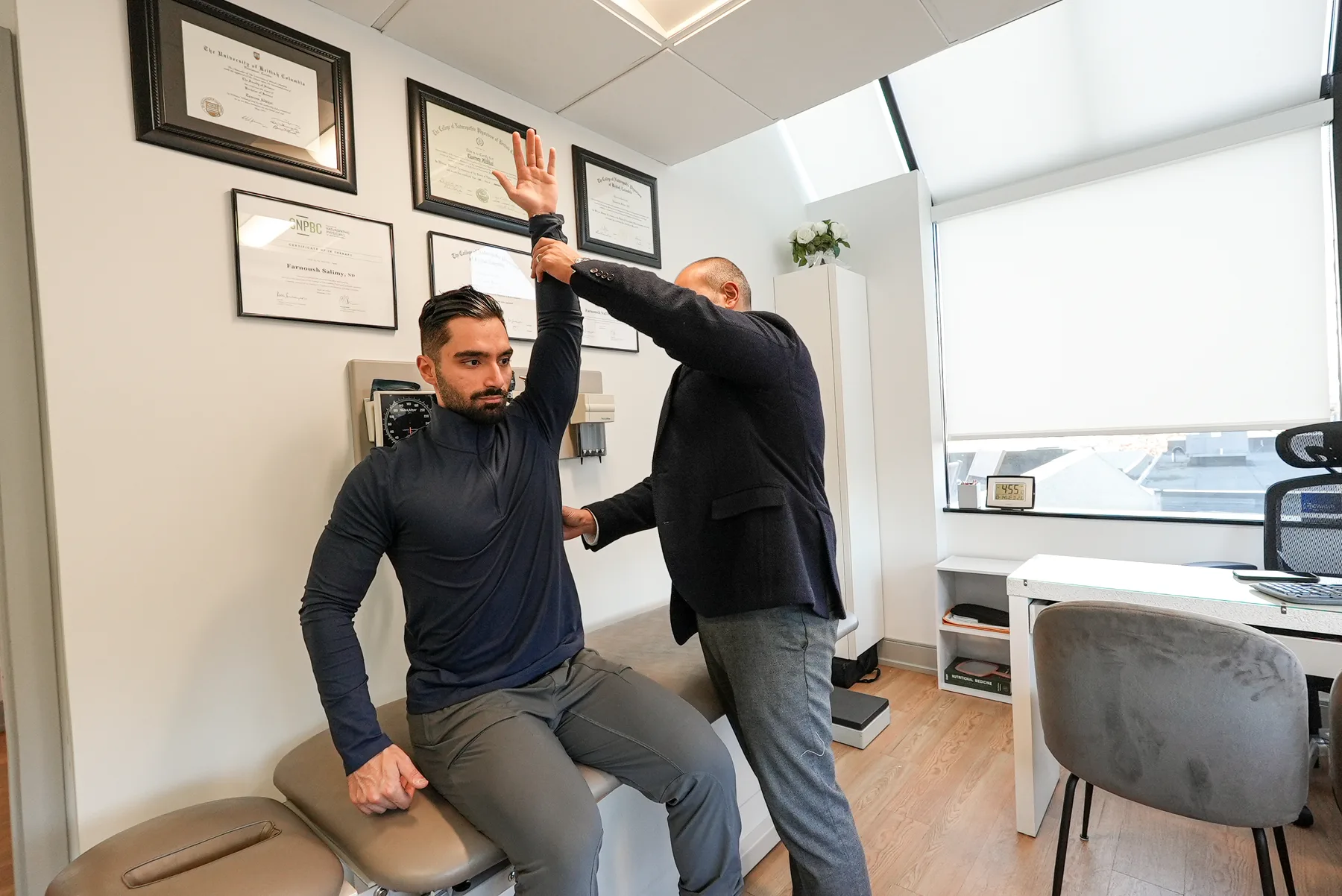
How strength, range, symptom behaviour, daily demands, and other possible sources of pain fit together.
Managing load, restoring comfortable movement, and building shoulder capacity with an appropriate progression.
Explore by area
Start with the pattern, then assess the whole picture.
Hip pain
Hip symptoms can come from the joint, surrounding tendons and muscles, or the lower back. Location alone is not a diagnosis.
- Groin or front-of-hip pain
- Pain on the outside of the hip
- Stiffness after rest or sitting
Low back injuries
Back pain can feel alarming, but the pattern, irritability, and effect on movement matter more than any single symptom.
- Pain with bending or prolonged positions
- Symptoms into the buttock or leg
- Reduced confidence with lifting or activity
Ankle pain
Ankle pain often follows a sprain or a change in training load. Swelling, stability, and walking tolerance help guide the next step.
- Pain or swelling after a twist
- Repeated giving way
- Difficulty walking, running, or changing direction
Knee pain
Knee symptoms may reflect changes in load, strength, mobility, or tissue irritation. A useful assessment looks beyond the painful spot.
- Pain around or behind the kneecap
- Pain along the joint line
- Swelling, catching, or reduced confidence
When to seek urgent care
Do not wait on symptoms that feel medically urgent.
Seek prompt medical care after major trauma, or if pain is accompanied by a new deformity, sudden loss of strength or sensation, fever, chest pain, loss of bladder or bowel control, or rapidly worsening neurological symptoms.
Not sure what your symptoms mean?
Start with a focused assessment or request a callback so we can help clarify the right care route.